
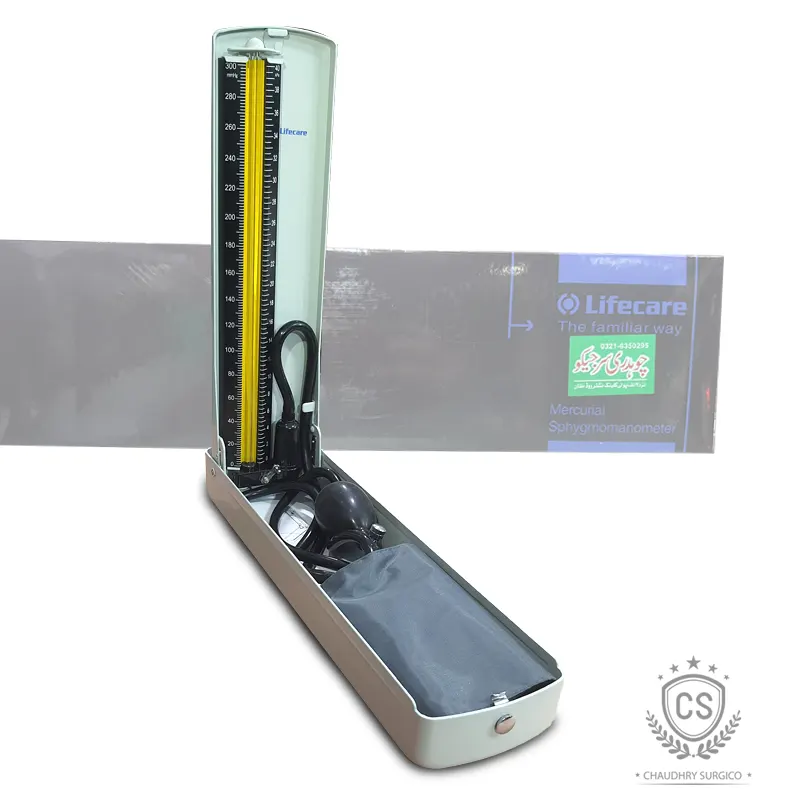

Description
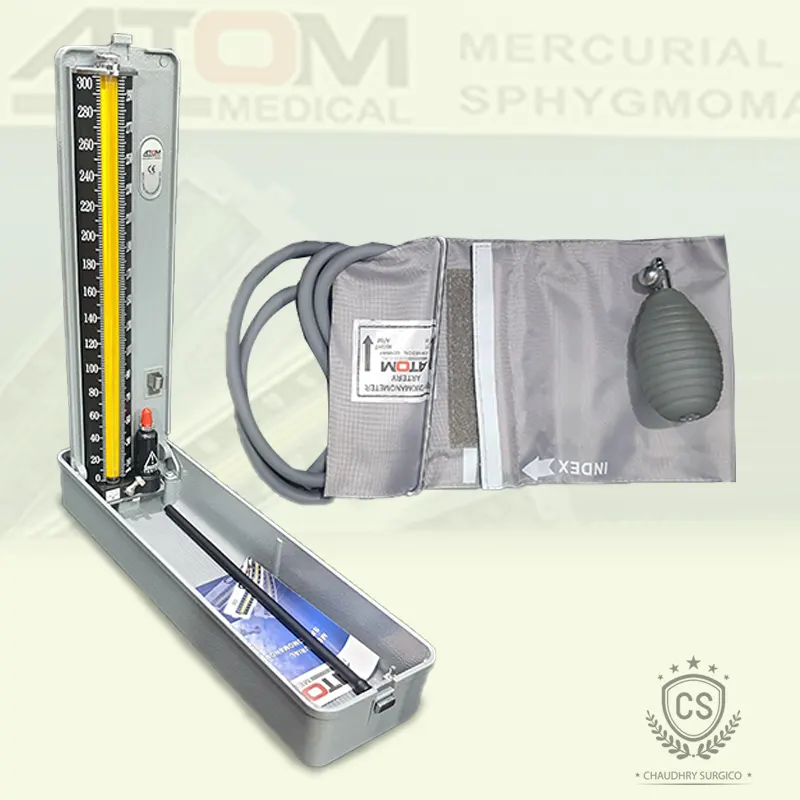
BP Mercury Lifecare Sphygmomanometer Usage
Operate in a quiet environment
Measure blood pressure at the same time every day
User should remain relaxed and stress free
Wear loose and comfortable clothing
Minimum scale graduation is 2 mmHg (0.5 kPa)
How to Check Blood Pressure
Open the sphygmomanometer case and ensure mercury level is at zero
Gently shake lower shell if air is trapped
Sit comfortably at a table
Place arm on the table with elbow at a 45 degree angle
Roll up sleeve above the upper arm
Wrap cuff evenly around upper arm
Align cuff center with brachial artery
Lower edge of cuff should be 3 cm above elbow joint
Cuff tightness should allow one to two fingers inside
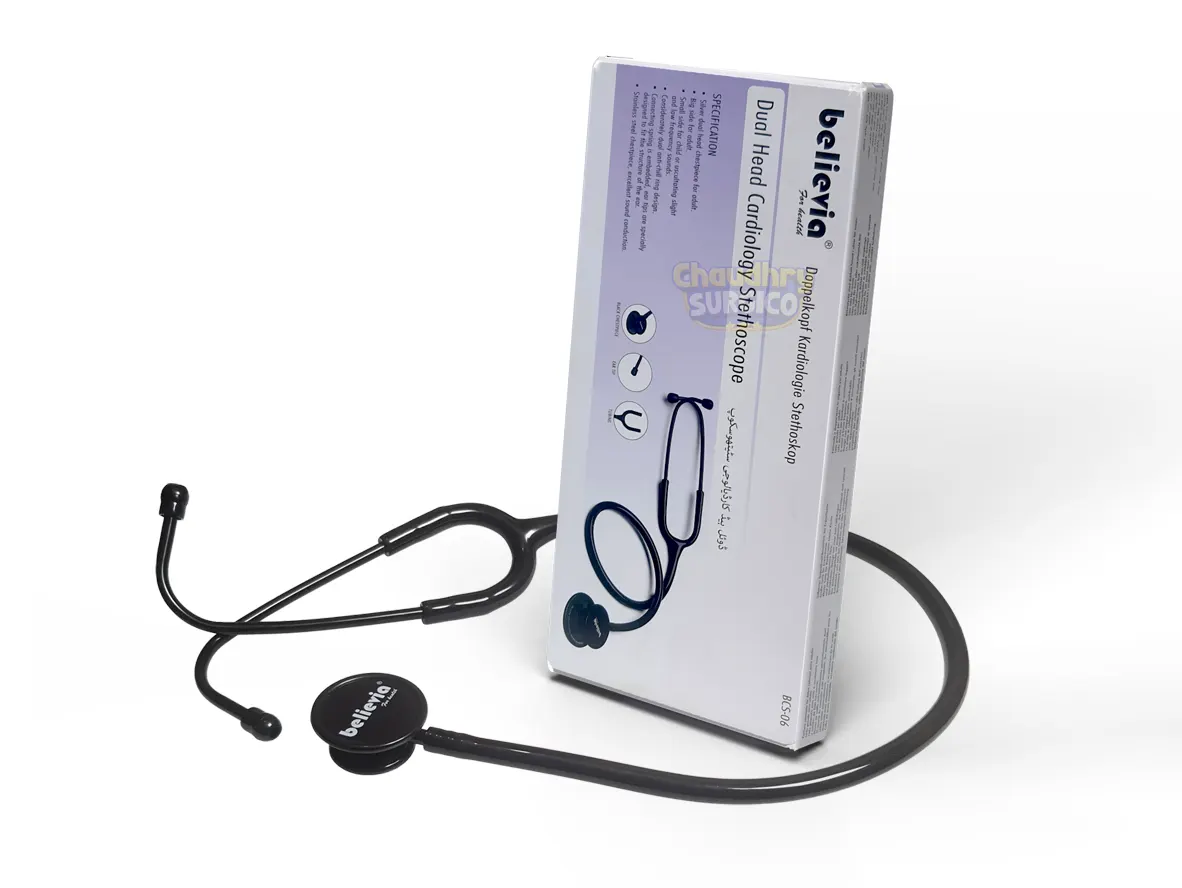
Place stethoscope head under the cuff on brachial artery
Keep arm at heart level
Use a pillow or soft support if needed
Measurement Method
Tighten air valve before pumping
Inflate cuff using rubber bulb
Increase pressure until pulse sound disappears
Pump additional 20–30 mmHg (2.5–4 kPa)
Release air slowly at 3–4 mmHg per second
First clear pulse sound indicates systolic pressure
Muffled or disappearing sound indicates diastolic pressure
Repeat measurement 2–3 times
Record average reading as final blood pressure
Consult doctor if readings are abnormal
Safety Instructions
Do not exceed 285 mmHg (38 kPa) pressure
Ensure mercury column returns to zero after use
Keep device horizontal while closing case



































Reviews
There are no reviews yet.